Manufacturing Systems Design
(NDA / Redacted)
05
"Designing clarity within complex manufacturing systems"
This case study represents my industrial design work within a live aerospace manufacturing environment.
Due to customer NDAs and security requirements, detailed artifacts, system screenshots, proprietary data, and production visuals cannot be shared publicly.
The content below focuses on design thinking, process ownership, and measurable outcomes, while respecting confidentiality.
Overview

Modern manufacturing environments generate vast amounts of operational and inventory data, yet much of it remains difficult to interpret, fragmented across systems, or inaccessible at the point of decision-making.
I worked as an Industrial Designer embedded within production and operations, applying human-centered design principles to manufacturing workflows, visual systems, and physical environments to improve clarity, efficiency, and decision confidence.
Context
Industrial Designer within a production and manufacturing setting
Owned the design of visual systems, workflows, and decision-support tools
Collaborated cross-functionally with engineering, manufacturing, supply chain, and leadership
Balanced usability, manufacturability, and operational constraints in real time
This work required designing not just artifacts, but systems that function reliably at scale.
My Role

Limited visibility into end-to-end production flow and operation-level status
Inefficient inventory storage and inconsistent material traceability
Manual, time-intensive cycle count processes
Difficulty assessing program health and identifying bottlenecks quickly
Physical inefficiencies in tooling and storage layouts
These challenges impacted speed, accuracy, and confidence in day-to-day decision-making.
Challenges Addressed
My approach focused on treating manufacturing data and physical workflows as designable systems.
Mapped production, inventory, and material movement end-to-end
Identified breakdowns in information flow, physical movement, and user interaction
Applied human-centered design principles to non-traditional design contexts
Prioritized clarity, visual hierarchy, and usability over complexity
Designed solutions that could be adopted quickly within live production environments
The goal was not to add tools, but to remove friction.
Design Approach
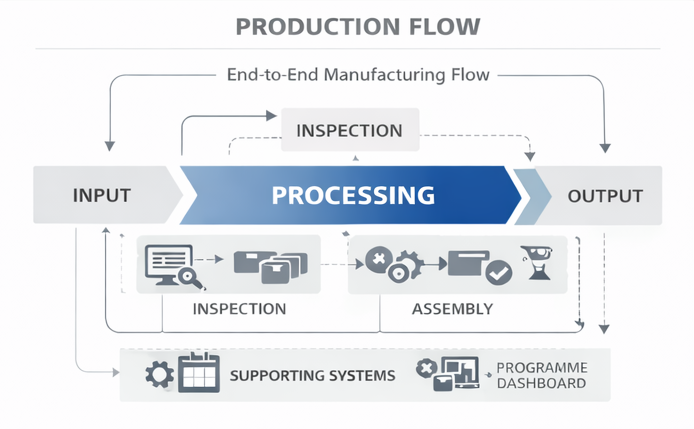
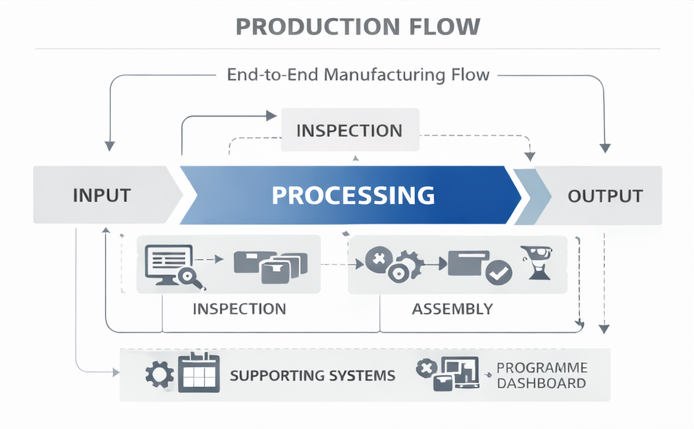
Manufacturing Flow Mapping
I mapped the end-to-end manufacturing flow to identify breakdowns in visibility, hand-offs, and inspection feedback loops.
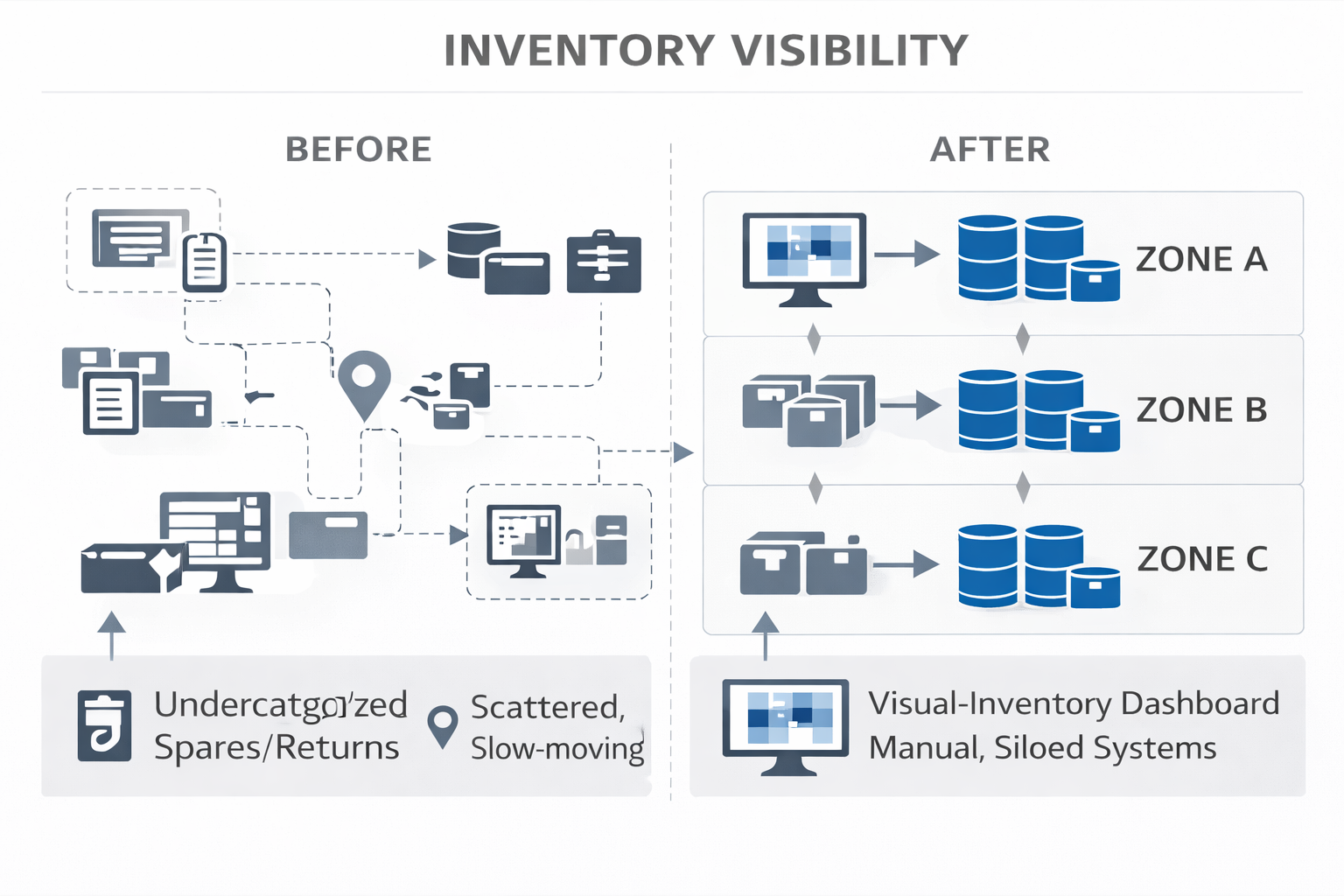
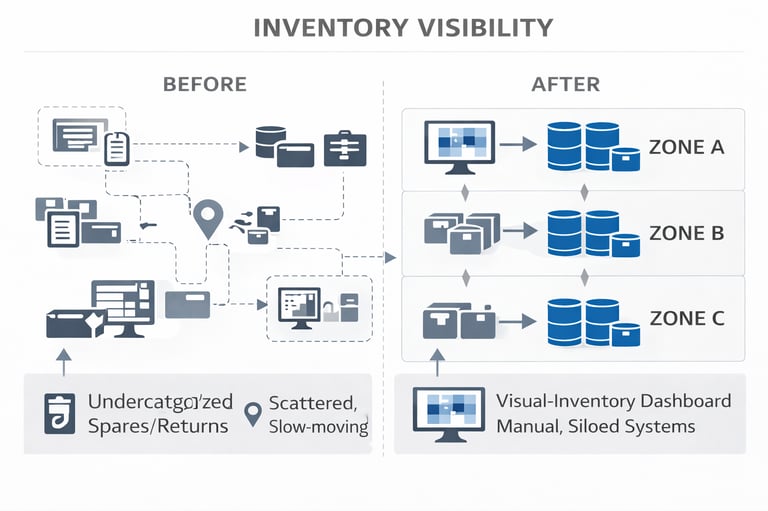
Inventory Visibility & Program Health
I redesigned how inventory data was structured and visualized to move from fragmented, manual tracking to zone-based visibility.
While detailed artifacts cannot be shown, my design work included:
Manufacturing flow visualizations and system maps
Inventory heat-map frameworks (structure and logic only)
Cycle count process redesign and visual logic
Tooling and inventory storage layout concepts
Program-level dashboards and decision-support structures
All outputs were designed to integrate seamlessly with existing workflows.
Design Outputs (Redacted)
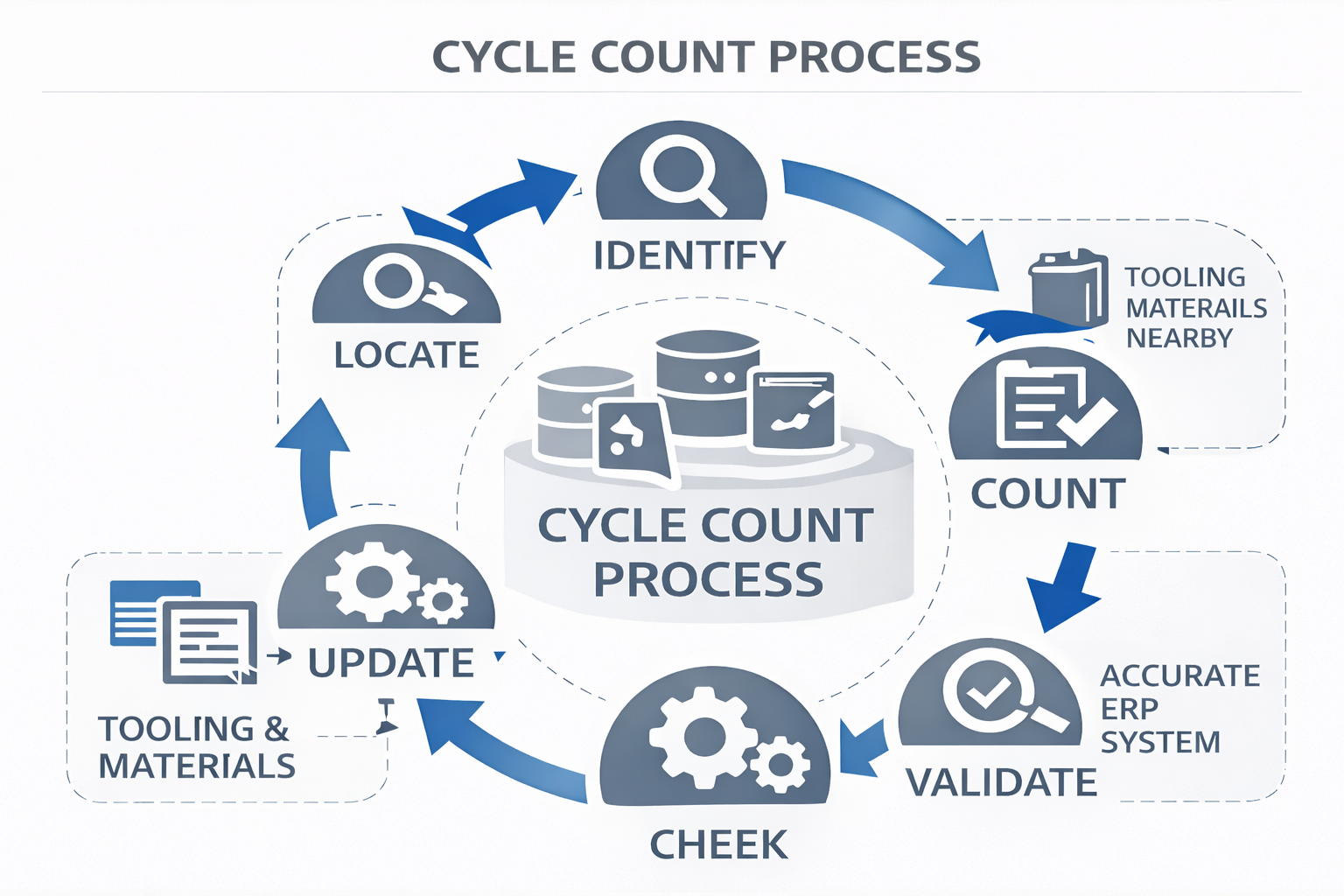
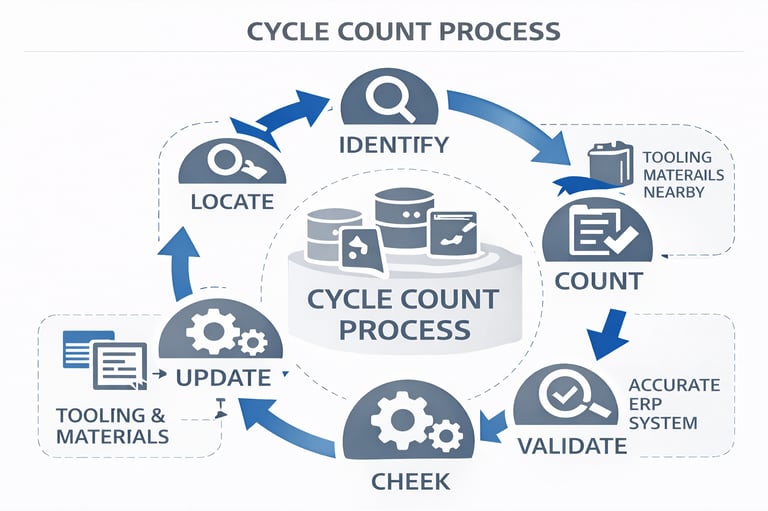
Cycle Count Process Redesign
I restructured the cycle count process into a closed-loop system focused on accuracy, validation, and continuous improvement.
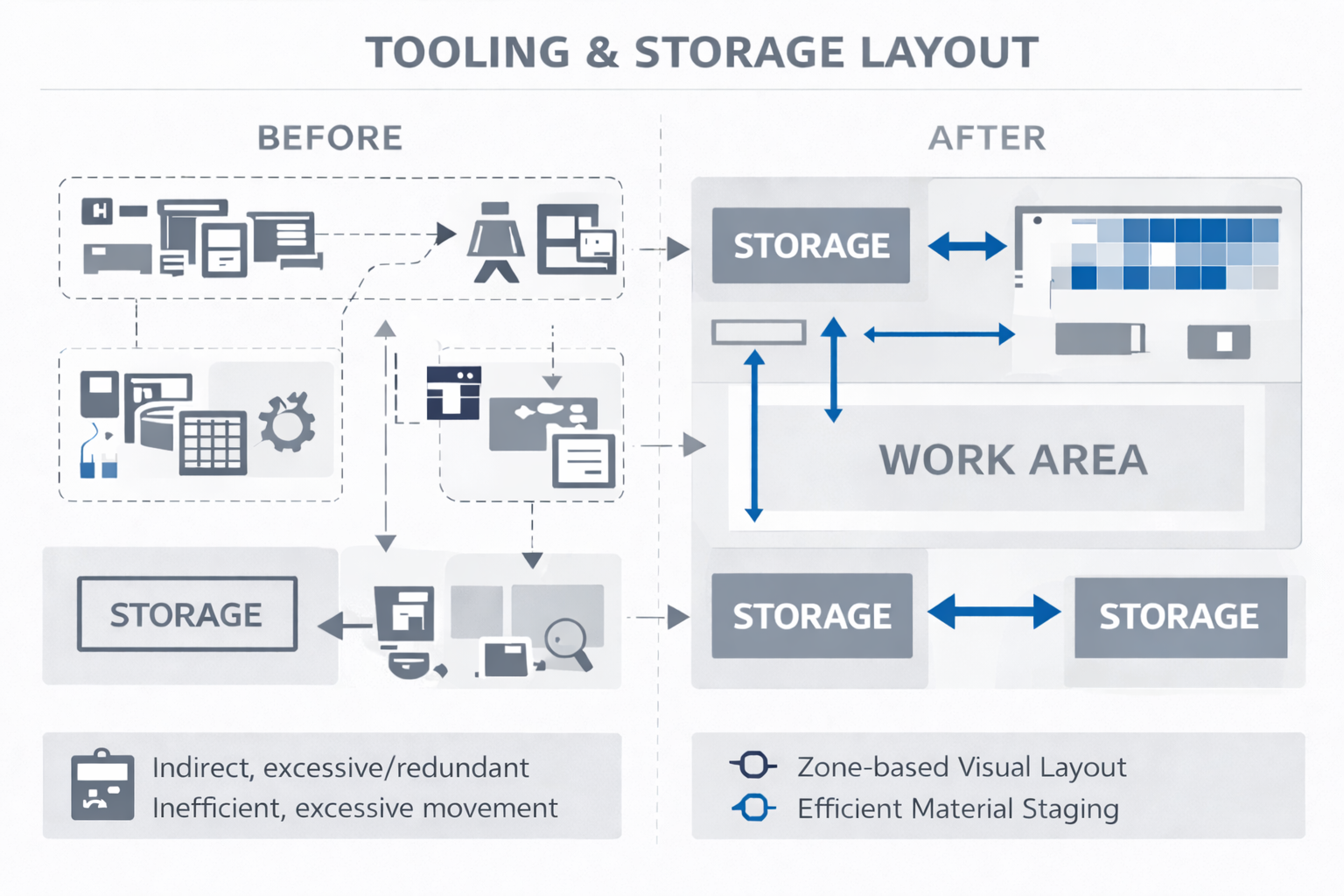
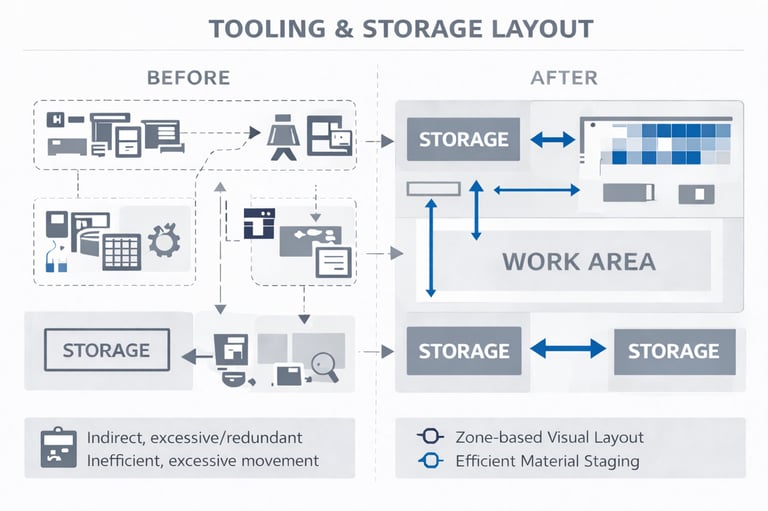
Tooling & Storage System Optimization
I applied DFM and lean principles to redesign tooling and storage layouts, reducing travel, search time, and physical inefficiencies.

Reduced time required to diagnose production delays by ~90%
Identified and flagged $1M+ in slow-moving inventory
Improved inventory accuracy and cycle count reliability
Reduced physical search and travel time within tooling and storage areas
Enabled faster program health reviews and leadership decision-making
These improvements were achieved without disrupting live production.
Outcomes
Manufacturing systems demand clarity over visual complexity
Well-designed visual logic directly impacts operational efficiency
Design decisions must withstand scale, variability, and human error
Cross-functional alignment is as critical as the design artifact itself
This work reinforced my belief that industrial design has a powerful role beyond form in shaping how complex systems are understood and used.
Key Learnings
Confidentiality Note
This case study is intentionally redacted to respect customer confidentiality and aerospace security requirements. Additional context, process rationale, and design thinking can be discussed verbally during interviews.